Why Modular Sofas Are Growing in Europe in 2026

A modular sofa looks simple.
One seat.
Another seat.
An arm.
A chaise.
An ottoman.
Connect them differently and the same product becomes something new.
That simplicity is exactly why modular seating is becoming increasingly important in Europe.
CSIL's 2026 upholstered furniture analysis identifies modular seating systems as the fastest-growing upholstered furniture format in the European market.
But the reason is bigger than furniture style.
Modularity fits how Europeans increasingly live, shop and move.
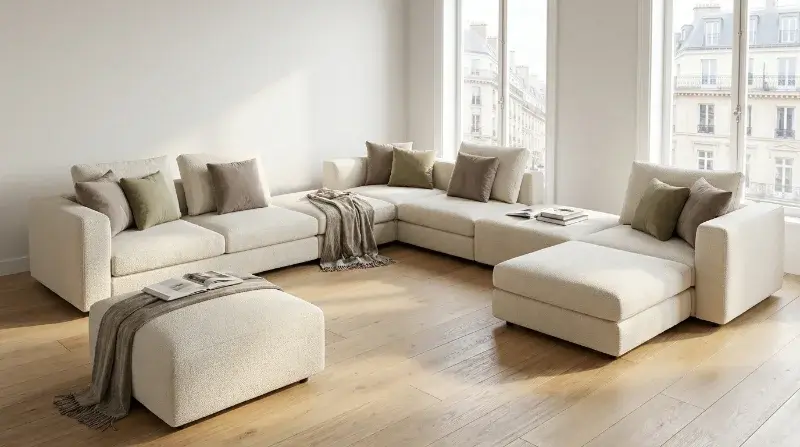
1. European Living Rooms Are Doing More
A living room is no longer used only for sitting.
It can be:
a home office in the morning,
a family space in the afternoon,
a social space at night,
and occasionally even a sleeping area.
Furniture therefore needs to adapt.
A fixed three-seat sofa offers one answer.
A modular sofa offers several.
The same modules may become:
a straight sofa;
an L-shape;
a chaise configuration;
a larger family layout;
separate seating.
This makes modularity particularly relevant for urban households and changing living arrangements.
2. One Product Platform Can Create Multiple Retail SKUs
For retailers, modularity offers another advantage.
One engineering platform can become multiple products.
A basic system may include:
single seat module;
corner module;
arm module;
chaise;
ottoman.
Combine these with several upholstery options and colours, and one structural platform can support an entire retail collection.
This can reduce the need to engineer every sofa from zero.
3. Modular Furniture Can Support Easier Replenishment
Shared components can simplify inventory.
If several configurations use the same:
feet;
connectors;
seat cushions;
back cushions;
arm components,
replacement and reorder planning can become easier.
The product becomes a system rather than a collection of unrelated SKUs.
4. Logistics Is Becoming Part of Sofa Design
Sofas occupy a lot of volume.
That makes logistics a major commercial consideration.
Modular designs can make it easier to optimize:
carton dimensions;
container loading;
final-mile handling;
elevator access;
door access;
e-commerce delivery;
customer assembly.
CSIL's 2026 reporting also notes growth in compressed and parcel-friendly sofa concepts, especially alongside online-first modular furniture brands.
The important lesson is simple:
logistics should be considered while designing the sofa—not after it is finished.
5. Modular Sofas Work Well for Private Label
For retailers building their own furniture brands, modular platforms provide flexibility.
The core structure can remain stable while the retailer changes:
upholstery;
colour;
feet;
arm design;
configuration;
cushion feel.
That creates differentiation without reinventing every internal component.
6. Customers Can Expand Instead of Replace
Modularity can also create a longer relationship between product and customer.
A couple may begin with a compact sofa.
Later, a larger home or family may require another module.
Instead of replacing the entire sofa, the system can potentially grow.
That changes furniture from a fixed purchase into a more adaptable product.
FAQ
What is a modular sofa?
A modular sofa consists of independent seating components that can be connected in different configurations.
Why are modular sofas popular in Europe?
They fit smaller homes, flexible living layouts, frequent moves and changing household needs.
Are modular sofas suitable for furniture retailers?
Yes. One modular platform can create multiple configurations and retail SKUs while sharing many components.
Can modular sofas reduce shipping costs?
They can. A well-engineered modular design can improve carton dimensions, handling and container utilization.
Are modular sofas good for private-label programs?
They are particularly suitable because retailers can differentiate the product through fabrics, colours, modules and configurations while retaining a shared structural platform.
CTA
Planning a Modular Sofa Collection for Europe?
Aoki develops OEM modular sofa programs for European B2B customers, including configuration development, product engineering, material selection, packaging and bulk production.
Whether you are building a 2-seat, L-shape or complete modular family, we can review the platform from both a product and logistics perspective.
Email: baosen@aokifurnitures.com
Website: https://www.aokifurnitures.com/


Kommentare